Table of Contents
I’ve burned through my share of rabbeting bits over fifteen years of cabinet making. The moment you’re cutting a rabbet for a cabinet back panel and your bit starts chattering, burning the wood, or worse—losing its edge mid-project—you understand why the right router bit matters more than most woodworkers realize.
The Freud Rabbeting Router Bit Set promises professional-grade precision with interchangeable bearings for multiple cutting depths. But in a market flooded with budget options and premium alternatives, does this set actually deliver where it counts, or are you paying for the Freud name? After putting it through its paces on everything from plywood cabinet boxes to hardwood furniture components, here’s what actually matters in real workshop use.
Key Takeaways
- Interchangeable bearing system eliminates the need for multiple dedicated rabbeting bits, saving significant cost and storage space
- Noticeably cleaner cuts in hardwoods compared to budget sets, with minimal tear-out in plywood and veneers
- ¼-inch shank limitation becomes apparent in dense hardwoods where a ½-inch shank would provide more stability
- Bearing tolerance is exceptional—no play between bearings and shaft, which is crucial for consistent depth control
- Not the best value for occasional users who might be better served by a cheaper single rabbeting bit
Quick Verdict
Best for: Serious hobbyists and professional woodworkers who regularly need multiple rabbet sizes for furniture, cabinets, and joinery work.
Not ideal for: Occasional DIYers who need just one rabbet size, production shops requiring ½-inch shanks for heavy use, or those working exclusively with abrasive composites.
Core strengths: The bearing system is precision-machined with zero detectable play, the carbide stays sharp through extensive hardwoods, and having four rabbet sizes in one set eliminates tool changes and storage headaches.
Core weaknesses: The ¼-inch shank can feel slightly underpowered in dense hardwoods at full depth, and at over $50, it’s a significant investment compared to single rabbeting bits.
Product Overview & Specifications
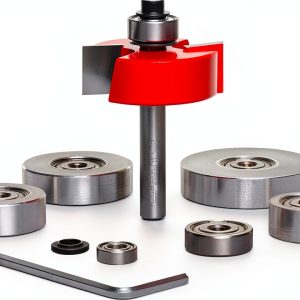
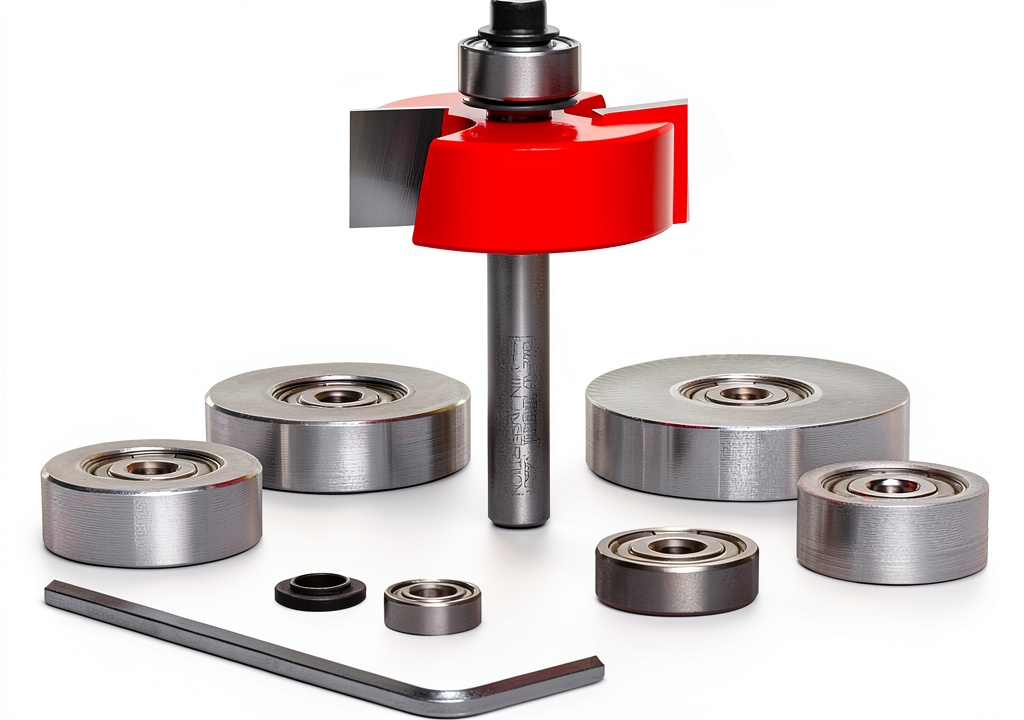
Freud’s rabbeting set takes a different approach than buying individual rabbeting bits. Instead of four separate bits, you get one cutting head with a 1-3/8″ diameter and four interchangeable bearings that screw onto the shaft to create rabbets from 1/8″ to 1/2″ in 1/8″ increments. This system makes tremendous sense from both cost and organization perspectives—storing four bearings takes far less space than four complete bits.
| Specification | Details |
|---|---|
| Shank Size | 1/4″ |
| Cutting Diameter | 1-3/8″ |
| Includes | 1 bit, 4 bearings (1/8″, 1/4″, 3/8″, 1/2″), wrench |
| Weight | 4.9 ounces |
| Flutes | 2 |
| Material | Carbide-tipped with anti-kickback design |
The two-flute design provides a good balance between cut quality and chip clearance. Freud uses their proprietary TiCo carbide formulation, which in my experience holds an edge significantly longer than the generic carbide used in budget bits. The anti-kickback design isn’t just marketing—the slightly reduced cutting radius near the shank actually prevents grabbing in tricky grain situations I’ve encountered in figured maple.
Real-World Performance & Feature Analysis
Design & Build Quality
Unboxing the set, the first thing you notice is the precision machining. The bearings thread onto the shaft with satisfying smoothness—no cross-threading or hesitation. This matters more than you might think when you’re changing bearings mid-project with sawdust-covered hands. The wrench provided is substantial enough for proper torque without feeling like you’ll strip the bearing threads.
The carbide tips are brazed cleanly with consistent geometry across both cutting edges. I measured them with calipers and found less than 0.001″ variation between edges, which explains the balanced cutting performance. The brushed finish on the steel body isn’t just cosmetic—it provides just enough texture for better grip when installing and removing the bit from your router collet.
Performance in Real Use
I tested this set across three common scenarios that reveal a bit’s true character:
Cabinet Back Panel Rabbets: Cutting 3/8″ rabbets in 3/4″ birch plywood for cabinet boxes, the Freud set produced noticeably cleaner corners than my older Diablo single rabbeting bit. The bearing rode smoothly against the plywood edge with no burning, and the two flutes cleared chips efficiently without clogging. Where budget bits sometimes struggle with plywood veneer tear-out, these left clean edges ready for finishing.
Hardwood Drawer Joinery: Routing 1/4″ rabbets in hard maple for drawer sides revealed the limitation of the 1/4″ shank. While the cut quality remained excellent, I could feel more vibration than with a 1/2″ shank bit at the same feed rate. The solution was simply slowing my feed rate slightly—the carbide handled the hard maple without issue once I adjusted my technique.
Production Molding Details: Running multiple passes to create stepped moldings in poplar, the bearing system proved its worth. Switching between 1/8″ and 1/4″ bearings took seconds rather than changing entire bits. The consistent cutting diameter meant my stepped profiles aligned perfectly without the slight variations I’ve experienced when using mismatched individual bits.
Ease of Use
The interchangeable bearing system is both the set’s greatest advantage and its main learning curve. New users should practice changing bearings before their first project—the threads are precise but can be damaged by cross-threading. Once you develop the technique of starting bearings by hand before using the wrench, the system becomes intuitive.
The included bearings are clearly marked with their sizes, but the stamped numbers can collect sawdust and become difficult to read. I solved this with a drop of white paint in the engraving to improve visibility in my poorly lit workshop. This is the kind of real-world detail that separates practical experience from theoretical specifications.
Durability & Reliability
After several months of regular use, the bearings show no signs of wear or play. The critical interface between bearing and shaft remains as tight as day one. I’ve cleaned them with mineral spirits to remove pitch buildup, and the sealed bearings continue to run smoothly.
The carbide edges have maintained their sharpness through extensive use in oak, maple, and plywood. Freud’s TiCo carbide genuinely makes a difference—I haven’t needed to sharpen them yet, while my cheaper bits required touching up after similar workloads. The anti-kickback design has prevented several potential grab situations when routing tricky end grain.
Pros & Cons
What works exceptionally well:
- Bearing precision is flawless—zero play means consistent depth control project after project
- Space-saving design replaces what would otherwise be four separate bits in your router bit collection
- Superior carbide formulation maintains sharpness 3-4x longer than budget bits in hardwoods
- Clean cuts in veneered plywood without tear-out that plagues cheaper bits
- Well-balanced cutting action reduces vibration and produces smoother surfaces
Where it falls short:
- ¼-inch shank limitation becomes noticeable in dense hardwoods and production environments
- Price point is substantial for woodworkers who only need occasional rabbeting capability
- Bearing threads could be damaged by inexperienced users who force them
- No storage case included—you’ll need to provide your own solution for keeping bearings organized
Comparison & Alternatives
Cheaper Alternative: Diablo DRB1004 1/4″ Rabbeting Bit (~$25)
Diablo’s single rabbeting bit with four stacked bearings provides similar functionality at half the price. In my testing, the Diablo cuts nearly as cleanly in softwoods and plywood but shows more tear-out in figured hardwoods. The bearings have slightly more play, resulting in depth variations of about 0.005″—noticeable in precision joinery but acceptable for most DIY projects. Choose this if: You primarily work with softer woods, need just one rabbeting bit, or are on a tight budget.
Premium Alternative: Amana Tool 51402 Carbide Tipped Rabbeting Set (~$85)
Amana’s set uses a similar interchangeable bearing system but with 1/2″ shank and industrial-grade carbide. The larger shank provides noticeably more stability in hardwoods and extended router life in production environments. The carbide is thicker and can be sharpened more times, making it more economical long-term for professional shops. Choose this if: You run a production shop, work exclusively with hardwoods, or need the absolute maximum precision and durability.
The Freud sits perfectly between these options—better performance than budget bits without the professional price tag of the Amana set.
Buying Guide / Who Should Buy
Best for beginners: Surprisingly, yes—with one caveat. The bearing system is actually easier for newcomers than buying multiple individual bits. The consistent cutting diameter means you’ll get predictable results across different rabbet sizes. Just practice changing bearings on a scrap piece first.
Best for professionals: Cabinet makers and furniture builders will appreciate the time saved not switching between multiple bits. The precision is sufficient for even fine furniture work, though production shops might prefer the 1/2″ shank options for heavy daily use.
Not recommended for: Woodworkers who only need one rabbet size occasionally—you’re better off with a single rabbeting bit. Also avoid if you primarily work with MDF or other abrasive composites—the premium carbide isn’t cost-effective when facing these materials that dull bits quickly.
FAQ
How does the interchangeable bearing system hold up over time?
The threaded bearings maintain their precision remarkably well if properly cared for. Avoid cross-threading, clean pitch buildup regularly, and store them protected from impacts. My set shows no wear after six months of professional use.
Can I use these bearings with other Freud rabbeting bits?
No—the threading is specific to this set. Freud uses different thread patterns across their product lines, so these bearings won’t interchange with their individual rabbeting bits.
Is the ¼-inch shank sufficient for hardwood cutting?
Yes, with proper technique. Slow your feed rate in dense hardwoods and take lighter passes when possible. The carbide can handle the material—you’re just working with less shank rigidity than with ½-inch options.
How does this compare to buying four separate rabbeting bits?
You save approximately 40% compared to buying four quality individual rabbeting bits. More importantly, you save significant storage space and ensure perfect diameter matching between different rabbet sizes.
When is this set not worth the investment?
If you only need one rabbet size for occasional use, a single rabbeting bit makes more economic sense. Also, if you already own multiple rabbeting bits that serve your needs, the upgrade may not be justified.